
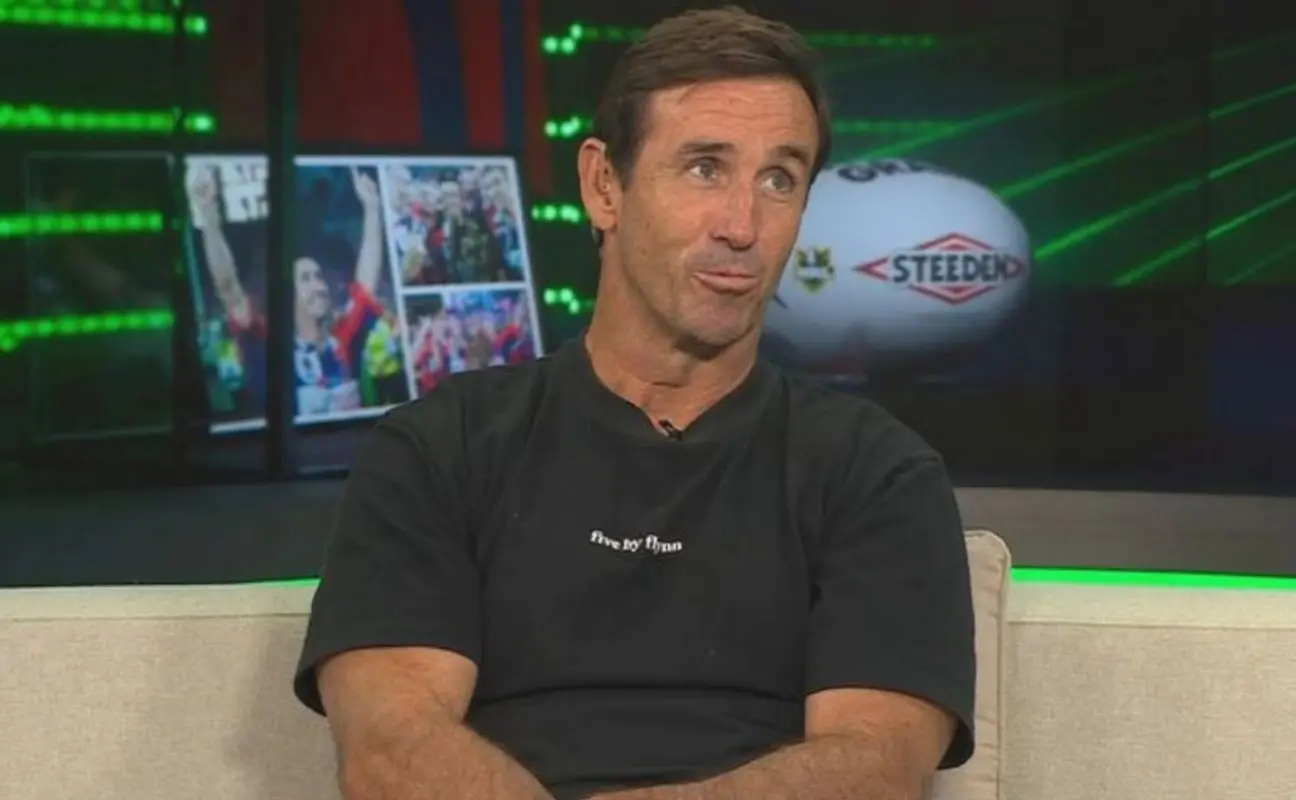
In a characteristically direct assessment that has sparked debate across the rugby league landscape, Immortal Andrew Johns has stated that the Brisbane Broncos’ prospects of defending their 2025 premiership title are, for all practical purposes, over. Speaking recently, the former Test and State of Origin halfback repeatedly pointed to the team’s ongoing defensive frailties and the severe personnel shortages that have left as many as nine players unavailable, the majority of them established first-graders whose absence has stripped the side of both experience and structure.
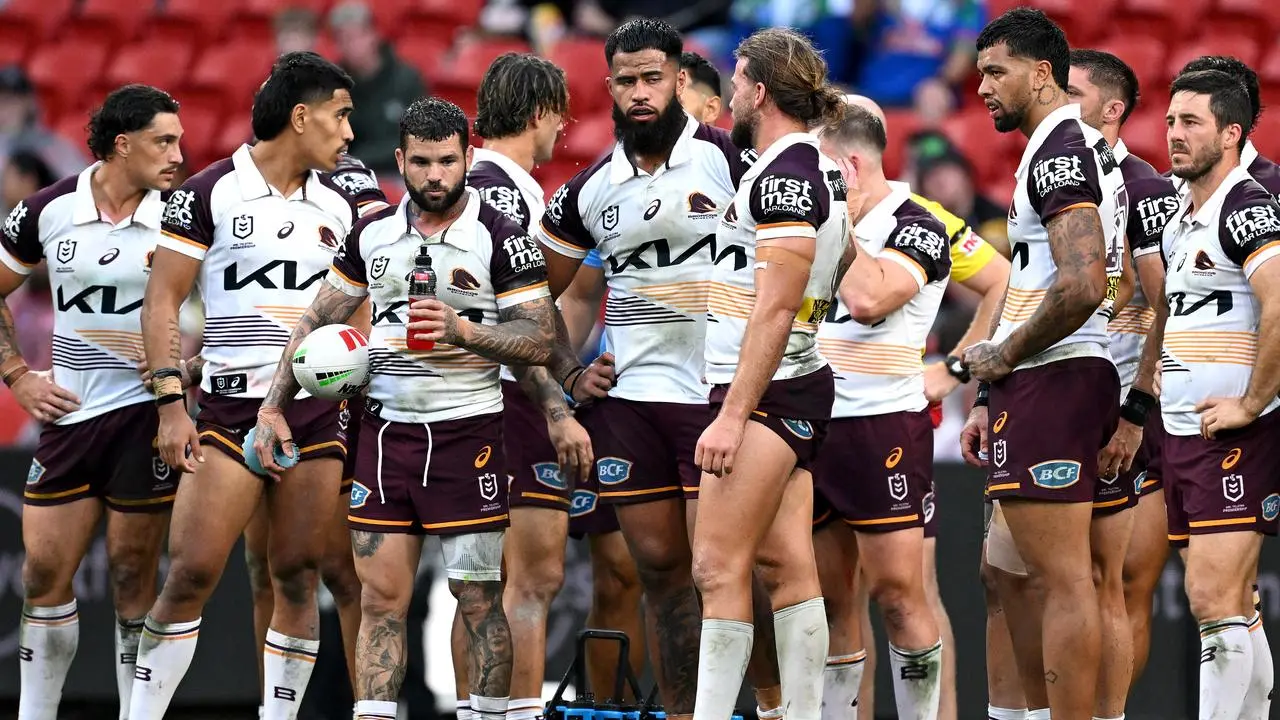
The Broncos entered 2026 as the benchmark. Their grand final victory the previous year had been built on a blend of youthful exuberance, experienced leadership and a defensive system that conceded fewer points than any other club across the regular season and finals. Expectations were naturally high. Yet the opening months of the new campaign have delivered a different reality. Losses to teams occupying lower positions on the ladder have been accompanied by defensive lapses that have seen the Broncos leak points in clusters.
Johns, never one to soften his language when he believes the game’s fundamentals are being neglected, has identified both the symptom and the cause. The symptom is clear on the field: missed tackles, poor line speed in the middle third, and a backline that has too often been caught out of position or failed to communicate effectively under pressure. The cause, in his view, lies in the injury toll that has removed key personnel for extended periods.
Among those unavailable at various stages have been Payne Haas, Pat Carrigan, Jordan Riki and Deine Mariner, alongside intermittent absences for Reece Walsh himself. When a club loses that many contributors who normally anchor the middle defence, provide go-forward and organise the edges, the effects cascade. The remaining players carry heavier minutes, fatigue sets in earlier, and the intricate patterns that coaches spend weeks installing begin to fray. In the NRL, where margins are measured in centimetres and split-second decisions, any erosion of defensive cohesion is punished immediately.
Johns has emphasised that point without embellishment: a team cannot defend a premiership when its defensive line is regularly breached because the personnel required to maintain its shape and intensity are simply not on the field.
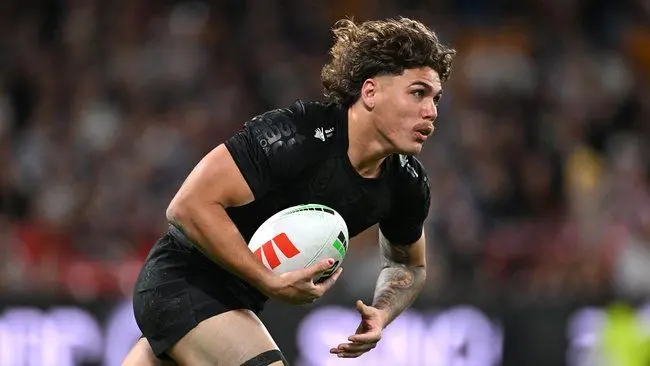
What has added another layer to the discussion is Johns’ assessment of Reece Walsh’s performances and what they reveal about the fullback’s trajectory this season. Walsh remains one of the competition’s most gifted attacking players. His ability to create something from nothing, to turn a broken play into a try through footwork or a perfectly weighted kick, is undisputed. Yet Johns has observed that the current circumstances have placed Walsh in a position where individual brilliance is being asked to compensate for collective shortcomings.
In several recent outings Walsh has produced moments of genuine quality, only for defensive lapses elsewhere, or occasionally from Walsh himself, to undo the advantage. Johns’ commentary has suggested that Walsh, for all his attacking flair, has not yet reached the level of defensive organisation and consistency required to lead a premiership-defending side through a prolonged period of adversity. The observation is not framed as a personal criticism so much as a statement of fact about the demands of the role.
A fullback in the modern game is the last line of defence, the sweeper, the communicator who must read the play unfolding in front of him and adjust the line accordingly. When that player is also expected to be the primary attacking threat because so many other strike weapons are missing, the workload becomes unsustainable and the occasional lapse becomes inevitable.
The logical consequence of Johns’ analysis is not that Walsh lacks talent or commitment. It is that no single player, however exceptional, can consistently overcome the structural deficits created by multiple long-term injuries to key position players. The Broncos’ 2025 success was the product of a balanced squad in which Walsh’s X-factor was supported by a robust middle defence and reliable edge defenders. Remove several of those supports and the equation changes. Walsh’s highlights remain spectacular, but the team’s overall points differential and completion rates tell a more sobering story.
Johns has essentially argued that this season will serve as a test of whether Walsh can evolve from a match-winning individual into the defensive leader and organiser his team now requires. That assessment has divided observers. Some view it as a fair appraisal of the gap between current reality and the standards expected of a player on a substantial contract at the game’s biggest club. Others see it as placing an unfair burden on a 23-year-old who has already shouldered significant responsibility.
The injury crisis itself deserves closer examination because it illustrates a wider challenge facing every NRL club. Modern rugby league places extraordinary physical demands on players. The speed of the game, the number of collisions and the compressed recovery windows between matches mean that even well-managed squads suffer attrition. The Broncos have been hit harder than most this year. The absence of Haas and Carrigan in particular has removed two of the competition’s premier middle forwards, players whose work rate in defence and ability to control the ruck provide the platform for everything else a team does.
Without that platform the edge defenders are exposed, the fullback is required to cover more ground, and the defensive line loses its shape. Riki’s absence has similarly affected the back-row balance, while Mariner’s unavailability has reduced options in the centres. When Walsh has also missed time, the Broncos have been forced to blood younger or less experienced players in critical positions, further disrupting on-field communication.
Johns’ pessimism about the premiership defence is therefore grounded in observable data rather than sentiment. A team that has already conceded large scores in several matches and sits well outside the top eight with the season barely at its midpoint faces an arithmetic reality: even a strong finish would require an extraordinary run of results against quality opposition. History shows that very few clubs have successfully defended a title while carrying such a significant injury burden into the middle of the year.
The 2025 Broncos succeeded because they were relatively healthy at the business end of the season and because their defensive system was intact. The 2026 version has been stripped of both advantages.
Yet the situation also contains opportunities for individual growth that should not be overlooked. Walsh, in particular, is at an age where exposure to adversity can accelerate development. Players who learn to organise a defence under duress often emerge as more complete leaders. The same applies to the younger squad members who have been thrust into first-grade minutes earlier than planned. Their performances in the coming weeks will determine whether the Broncos can at least arrest their slide and remain competitive, even if a finals berth now appears distant.
Johns’ comments, while blunt, ultimately serve as a reminder that premierships are won by squads, not by collections of individuals, and that defensive foundations must be maintained even when attacking talent is abundant.
For the Broncos organisation the immediate task is twofold. First, they must manage the return of injured players with extreme care to avoid further setbacks. Second, they must continue to develop the depth that was exposed as insufficient when the first-choice spine and forward pack were depleted. Recruitment in the coming off-season will be critical, but so too will the internal development of the next tier of players. Walsh’s continued presence and continued improvement remain central to any longer-term project.
If he can translate the lessons of this difficult season into more consistent defensive leadership while retaining his attacking threat, he will emerge better equipped for the challenges that lie ahead, whether at club or representative level.
Andrew Johns’ intervention has therefore done more than simply write off one team’s title hopes. It has focused attention on the delicate balance between individual brilliance and collective structure that defines success in the NRL. The Broncos’ 2026 campaign will be remembered less for what might have been and more for how the club and its star players respond to the reality that depth and defensive discipline remain non-negotiable, even for the most talented roster.
Discussion questions for readers:
To what extent do Andrew Johns’ comments reflect the reality that defensive structure and squad depth ultimately decide premiership outcomes more than individual attacking talent? How should Reece Walsh balance his natural attacking instincts with the increased defensive organisation and leadership demands placed on him during the Broncos’ current injury crisis? What lessons can other NRL clubs draw from the Broncos’ experience this season regarding injury management, player rotation and the development of genuine depth? Is it fair or productive for pundits to place significant responsibility for a team’s defensive failings on a single high-profile player such as the fullback, or does this overlook broader systemic issues? How might the Broncos’ 2026 struggles influence their recruitment strategy and long-term planning, particularly around retaining and developing players capable of stepping into key roles when established stars are unavailable?