
THE MOST HAUNTING MOMENT IN LIVE TELEVISION HISTORY
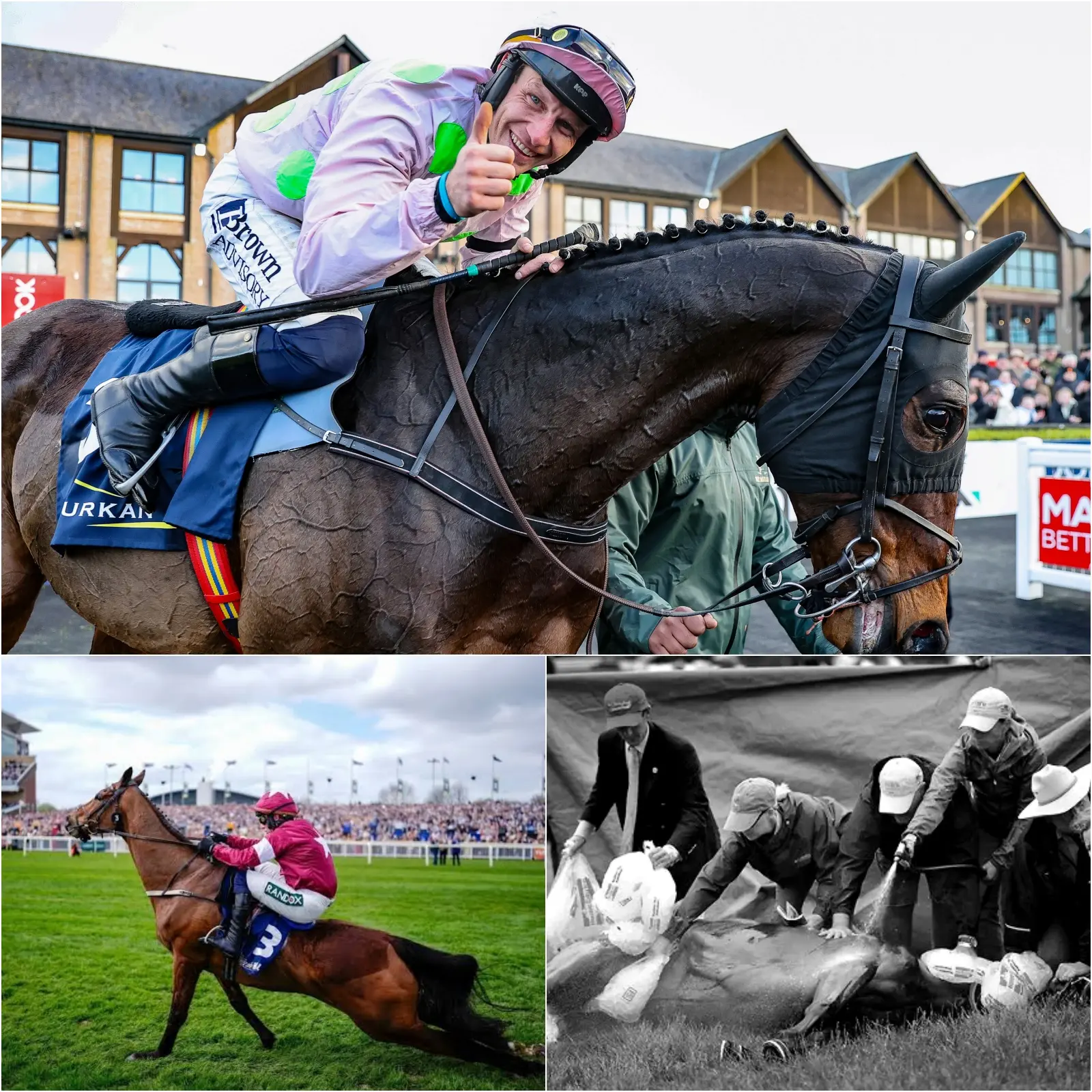
The roar of 70,000 spectators at Aintree Racecourse on a bright April afternoon in 2026 was still echoing across the famous Liverpool track when the unthinkable happened. In the space of 24 hours, two horses – Gold Dancer and Get On George – suffered catastrophic, irreparable injuries in full view of the crowd and millions watching live on television. What began as the thrilling highlight of Britain’s most iconic steeplechase meeting ended in scenes of profound grief and stunned silence that many viewers described as the most haunting moment ever broadcast on live television.
On Friday 10 April, the second day of the Grand National Festival, the William Hill Mildmay Novices’ Chase had delivered everything the packed grandstands had hoped for. Gold Dancer, the seven-year-old trained by Willie Mullins and ridden by Paul Townend, had jumped brilliantly and looked every inch the star performer. As the field approached the final fence with Gold Dancer in front, the atmosphere was electric. Then, in a split second, disaster struck. The horse made a bad mistake at the towering obstacle, landing awkwardly and sustaining a catastrophic back injury that would later be confirmed as a fractured spine.
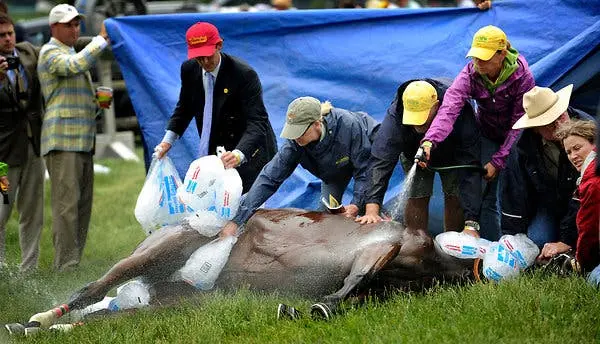
Adrenaline and sheer determination carried him forward. He straightened, kept galloping, and crossed the line first to the roar of the crowd. Only when he pulled up did the full horror become clear. On-course veterinarians rushed to his side. Television cameras, positioned for victory celebrations, instead captured the desperate attempts to save him. There was no recovery possible. Gold Dancer was euthanised on the spot, his noble body covered with a green sheet while the stunned spectators watched in disbelief.
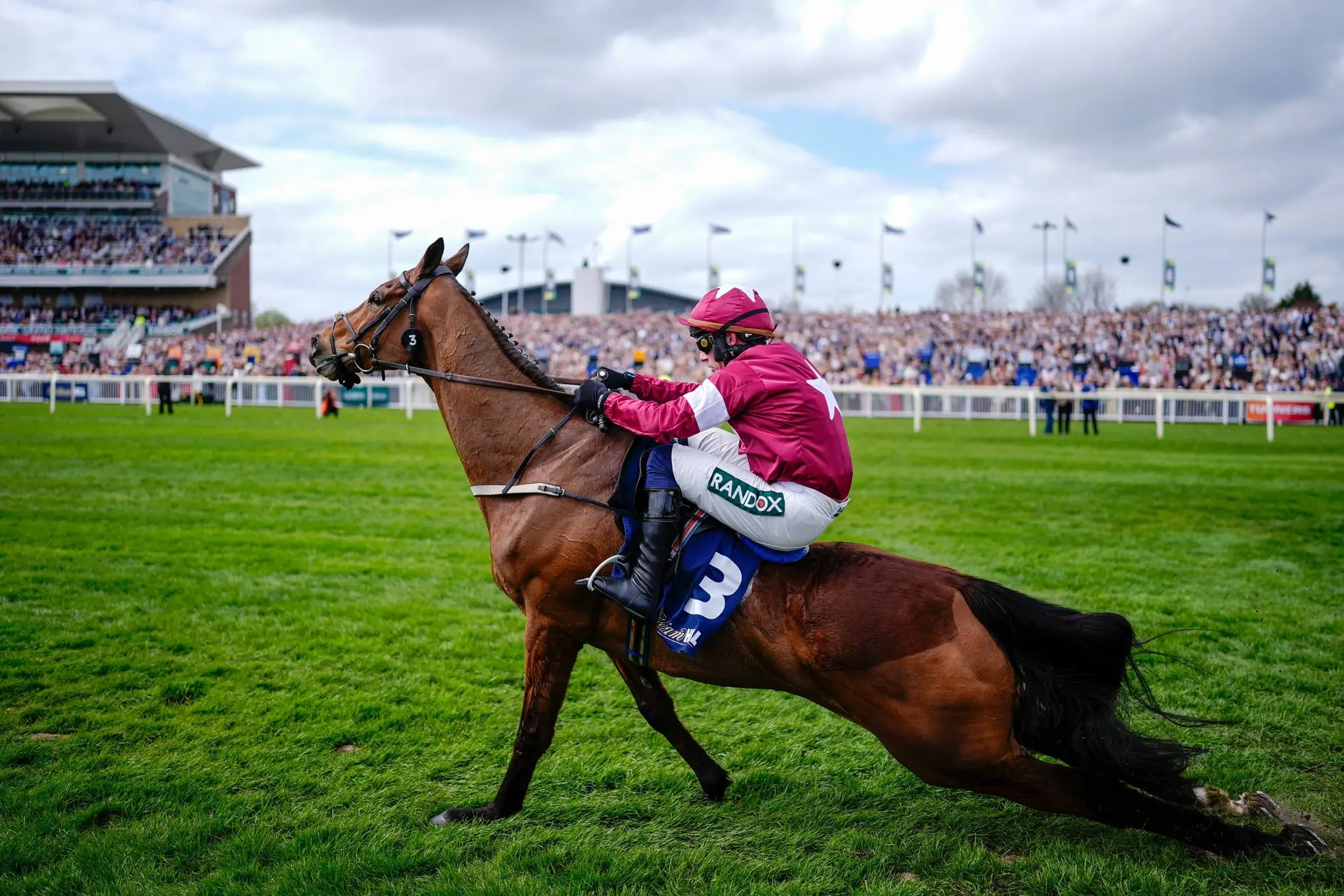
The following day, Saturday 11 April – Grand National day itself – the nightmare repeated. In the second race of the afternoon, six-year-old Get On George, trained by Joel Parkinson and Sue Smith and ridden by Jack Tudor, was travelling well when he suddenly pulled up sharply. The cause was immediately obvious to everyone watching: a catastrophic fracture of the near-hind fetlock, the joint in his rear left leg snapping under the immense strain of the race. Jockey Jack Tudor dismounted instantly. Vets were on the scene within seconds.
Once again the live television broadcast showed the grim reality unfolding in real time. There was no hope. Get On George was humanely euthanised on the course, just twenty-four hours after Gold Dancer had met the same fate. The two tragedies, unfolding on consecutive days and captured by cameras broadcasting to homes across Britain and around the world, created a collective sense of shock that transcended the usual boundaries of sport.
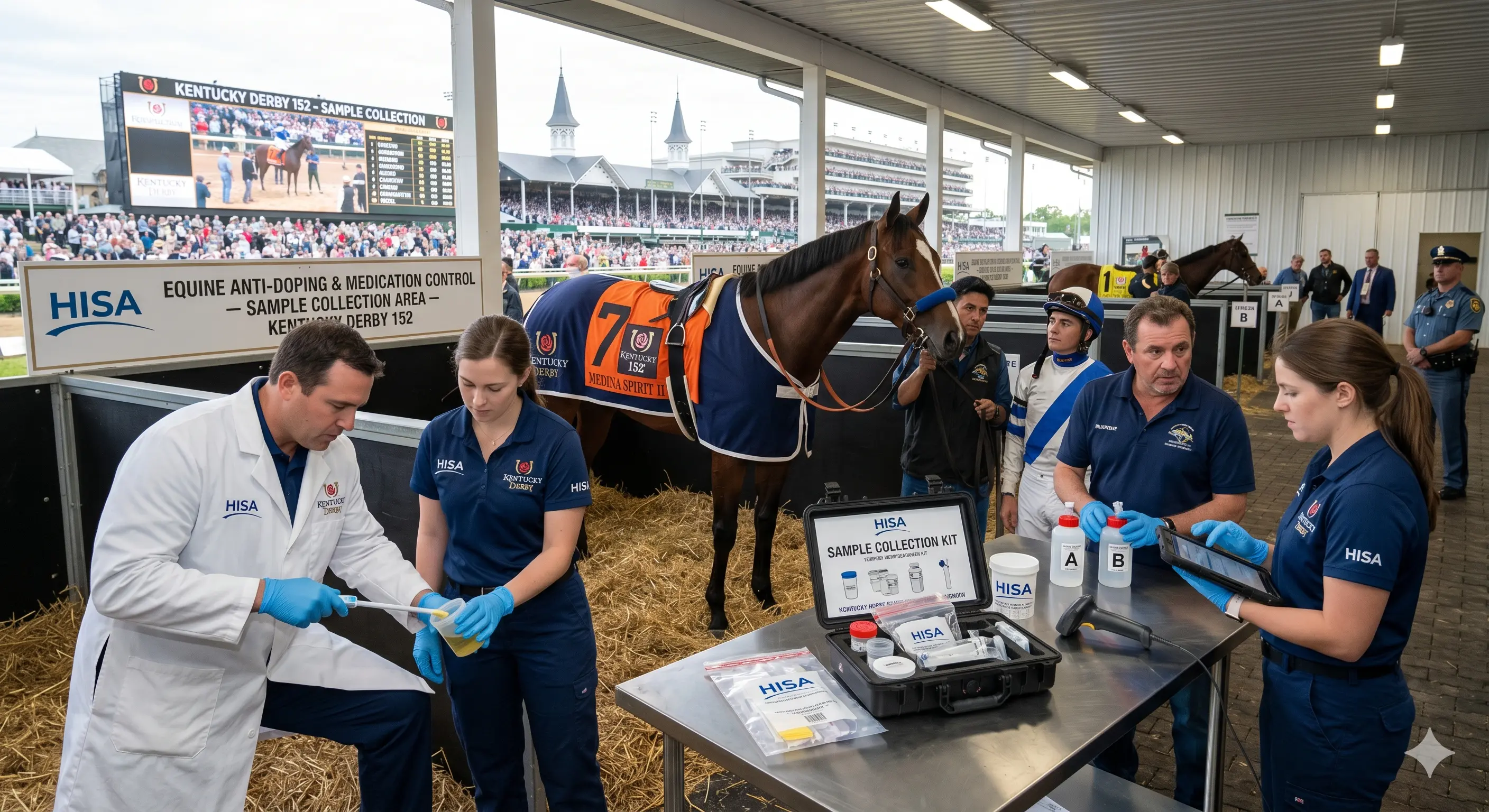
For the thousands of spectators packed into the stands, many of them families who had travelled from across the country for a day of excitement, the mood shifted in an instant from celebration to collective mourning. Children were shielded by parents. Conversations fell to whispers. The famous Aintree atmosphere, usually filled with laughter, music and the clink of glasses, was replaced by a heavy, oppressive silence broken only by the occasional sob. Viewers at home watching on ITV and international feeds reported the same visceral reaction.
Commentators who moments earlier had been describing the athleticism of the horses fell into long, painful pauses. One pundit’s voice cracked audibly as he tried to explain what the audience was witnessing. Social media lit up within minutes. Hashtags #RIPGoldDancer and #GetOnGeorge trended worldwide as people shared their horror at seeing such suffering broadcast live into living rooms.
These were not distant news reports or carefully edited documentaries. This was unfiltered, real-time tragedy occurring during one of the most watched sporting events on the British calendar. The Grand National Festival, with its three days of top-class jump racing culminating in the famous 4-mile, 30-fence main event first run in 1839, has always carried an element of risk. The fences are deliberately demanding, the pace relentless, and the physical toll on the horses immense.
Yet the visibility of these particular deaths – played out in high definition on national television – has seared itself into public consciousness in a way few previous incidents have managed.
Statistics only deepen the sense of unease. Since the year 2000, approximately 69 horses have died at the Grand National Festival. Across the entire history of the main race itself, the total approaches 90 fatalities. In 2026 alone, the RSPCA reports that 44 horses have already lost their lives in competitive racing across the UK, a figure that includes losses at other major meetings. Animal welfare groups such as PETA have been quick to condemn the events, arguing that the pursuit of spectacle and commercial gain continues to exact an unacceptable price.
“The owners and connections often claim they love these animals,” one PETA statement read, “yet they are still sent out to face fences that can – and do – end their lives in the most public way possible.”
Racing officials have pointed to improvements made over the years – modified fence designs, enhanced veterinary protocols, and stricter pre-race checks – but for many watching the 2026 Festival, such reassurances felt hollow. The images of the veterinarians kneeling beside the stricken horses, the quiet efficiency with which the final, irreversible decision was taken, and the sight of the green screens being erected to shield the animals from further public gaze, have left an indelible mark.
Jockey Paul Townend later told stewards that Gold Dancer had felt sound immediately after the final fence and had continued running in a straight line to the finish before losing his action on the bend. That testimony only added to the tragedy: a horse giving everything, crossing the line victorious, and then paying the ultimate price moments later.
In the days since, tributes have poured in from across the racing community and beyond. Gold Dancer was remembered as a talented prospect with a bright future cruelly cut short. Get On George was praised for his courage and honesty in the face of adversity. Memorial posts and black armbands appeared at racecourses up and down the country. Yet beneath the sorrow lies a deeper, more uncomfortable conversation.
Is the thrill of the Grand National – the roar of the crowd, the drama of the fences, the £1 million prize fund – worth the visible cost in equine lives? For many who witnessed the events of 10 and 11 April 2026 live on television, the answer has become painfully clear.
The most haunting moment in live television history was not a scripted drama or a distant disaster. It was the quiet, dignified way two magnificent athletes were helped from this world while tens of thousands watched in real time, powerless to intervene. Gold Dancer and Get On George will not be forgotten. Their final, heartbreaking moments have forced a nation to confront the true price of one of its most cherished sporting traditions.
As the debate over the future of jump racing intensifies, the images from Aintree that April weekend remain seared into the collective memory – a stark, unforgettable reminder that behind the glamour and excitement lies a reality that demands compassion, scrutiny, and, perhaps, fundamental change.